
Channel letters remain the clearest way to put a brand on a building. The construction is simple in concept and exacting in practice. You are shaping individual letters from aluminum, lighting them with LEDs, and finishing faces or backs so the message reads from a distance in daylight and in rain at night. The choice between front lit and halo lit changes brightness, readability, mounting method, cost, and even the tone of the storefront. This guide walks through how each type is built and where each one shines, so your next set delivers the look and performance you expect.
How channel letters are built
Every letter begins with a backer and a return. The backer is a routed aluminum plate that sets the shape. The return is the metal sidewall formed to that shape, usually aluminum in a standard gauge that balances rigidity and weight. Inside the can, low voltage LED modules bond to the backer. Wiring harnesses tie modules to a power lead that exits through the back or through a raceway. The face, if used, is a routed acrylic or polycarbonate panel fit with trim cap and sealed. The result is a self contained letter that a crew mounts to the wall, to a raceway, or to a panel known as a wireway. Power supplies sit inside the building or inside the raceway, taking line voltage to a constant voltage output that LEDs expect. The way light leaves the can defines the type. Front lit pushes light through the face. Halo lit throws light backwards to wash the wall.
Front lit channel letters
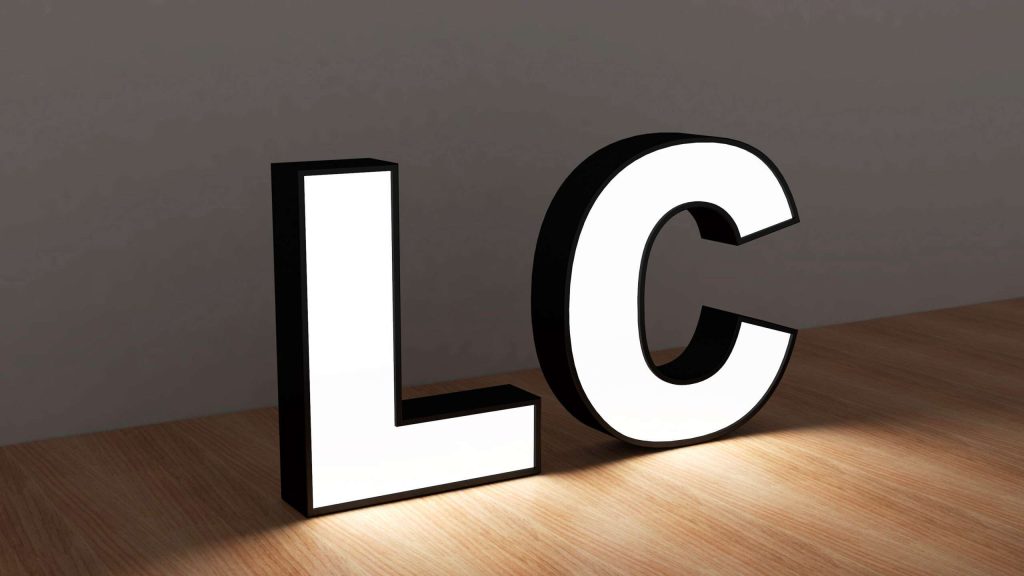
Front lit sets are the workhorse of retail, hospitality, and service. Each can has an acrylic or polycarbonate face that glows. The light exits forward, so letters punch through ambient light and traffic glare. If you are on a fast road or a bright corridor, this is the reliable choice.
Visibility and legibility
Front lit letters read at greater distances because the face is the light source. The letterform stays intact even against a busy facade. High contrast face colors improve legibility. White faces are brightest per watt, while colors carry brand tone with modest light loss.
Design range
You can specify flat faces, pan formed faces for depth, or faces with day or night films that show one color by day and shift at night. Stroke widths can run thinner than halo sets because the lit face does not depend on a wash pattern against a wall. Small accents such as strokes inside an R or A still glow when module layout is done well.
LED modules and return depth
Shallow returns reduce weight and stand-off, but LEDs need space to mix. A common return depth for small to medium letters is in the 3 to 5 inch range. Tighter returns demand higher module density or lens modules to avoid hotspots. A white interior backer helps blend light. Clear module spacing notes on the shop drawing prevent banding.
Maintenance and durability
Faces take wind load and the odd impact. Acrylic offers optical clarity and a crisp edge. Polycarbonate resists impact better and suits harsher sites. Faces remove with trim cap and tabs for service. A clean silicone or gasket line blocks water without trapping it. When a power supply or a module ages, field access through a raceway or service holes keeps downtime short.
Halo lit channel letters
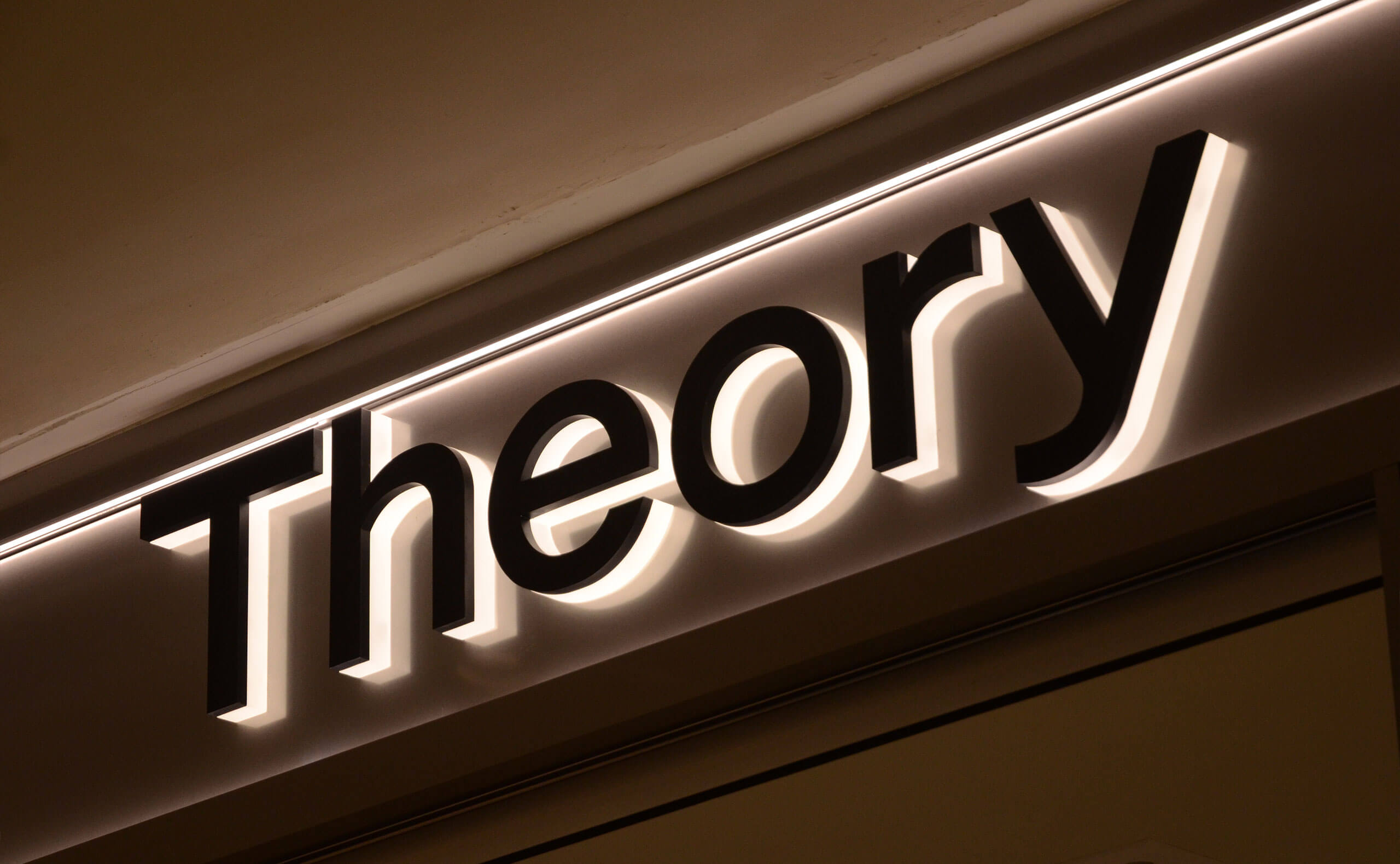
Halo lit, also called reverse channel or backlit, glow at the wall. The face and return are opaque, usually aluminum with a painted finish. Light exits through an open or translucent back and feathers onto the mounting surface. The effect is elegant and quiet. It appears in high end retail, boutique hospitality, and professional offices where tone matters more than raw punch.
The halo effect and background
A good halo needs the right wall. Smooth, light to mid tone backgrounds show a clean glow. Dark stone, deeply textured brick, or open corrugations scatter light and break the halo. A painted backer panel in the brand color solves this by giving a predictable surface. The panel can float slightly off the wall and lets you hide feed holes and wire runs.
Returns, stand-offs, and wash distance
Reverse cans mount on stand-offs so light has room to spread. Typical stand-off distance sits around one to two inches depending on letter size and desired glow. Returns are often deeper than front lit because you need space for LED aiming and serviceable wiring. The inside of the can is reflective. The back is clear or fitted with a translucent diffuser plate to soften hotspots. A taller stroke benefits from more stand-off to avoid a narrow bright ring.
LED layout for even wash
Halo lighting is less forgiving of poor module layout. You are not lighting a face, you are painting a wall. Modules should sit off edges and at consistent spacing so the wash band is even. A diffuser on the back closes the can and improves blend. White LED temperature around 5000 K reads clean and modern. Warm white around 3000 K softens the tone for restaurants and galleries. Keep color temperature consistent across the set.
Maintenance and weather
Reverse cans are sealed at the perimeter. The open back sits near the wall plane, so gaskets and spacers matter. Mounting hardware should be stainless. Weep paths must exist so any moisture can escape. Service is usually through the backer panel or raceway. A maintainable layout on the drawing saves hours later.
Choosing between front lit and halo lit
Pick front lit for speed roads, long viewing distances, and bright corridors. If you need to read from fifty meters while traffic moves, a glowing face wins. Pick halo lit when the site is pedestrian, when brand tone values restraint, and when a clean background is available or can be created with a panel. Many sites use a combination. A front lit primary name with halo lit tagline delivers hierarchy and style together. You can also specify dual lit letters that glow forward and wash the wall. Dual lit raises material and wiring complexity, so use it when the effect is essential and the budget permits.
Power supplies, wiring, and loading
LED modules draw low voltage DC. Power supplies convert line power to a constant voltage output, commonly 12 or 24 volts. Use supplies sized with headroom. Do not run at the edge of rated current. Keep power supplies accessible from inside the wall or in a raceway for fast replacement. Voltage drop across long runs affects brightness in distant letters. Plan feed points so no string runs past its comfort. Follow polarity marking and keep splices in listed enclosures. A tidy wiring diagram on the submittal prevents field improvisation.
Code, permits, and listings
Most jurisdictions require a permit for exterior illuminated signs. Plan for a site plan, elevation, attachment detail, electrical one line diagram, and a wind load note that references local code. Products and assemblies should be UL or equivalent listed for wet locations. Raceway mounts need engineered anchors appropriate for the facade material. Core drills and penetrations should be sealed to the building standard, not with ad hoc caulk alone. If you are in a historic district, color and mounting limits may apply, which can tilt the choice toward a softer halo effect and a reversible panel mount.
Materials and finishes that hold up
Returns and backs are typically aluminum to balance corrosion resistance and weight. Faces are acrylic or polycarbonate. Trim cap bonds faces to returns on front lit sets. For halo, the face is opaque, often painted or powder coated to a brand color. Metallic paints, satin blacks, and premium whites are common finishes. Avoid glossy dark returns where halos could reflect oddly off paint. White interiors help light blend. Stainless hardware avoids streaking. A planned cleaning routine keeps faces and diffusers clear.
Sizing, fonts, and legibility
Stroke width, letter height, and font choice decide readability as much as lighting does. Highly condensed fonts with thin strokes struggle at distance even when bright. Open, balanced fonts read sooner. A practical letter height for ground signs serving a city street starts around twelve to eighteen inches. For long setbacks, increase proportionally. Outline effects on faces, if used, should not pinch the stroke into slivers. Halo sets reward bolder strokes because the glow defines the form with a soft edge.
Budget, timeline, and access
Front lit sets tend to price lower per letter because fabrication is straightforward and faces do the heavy lifting. Halo lit demands careful LED layout, stand-offs, and often a backer panel, which increases parts and hours. Access to power inside the wall, lift rentals, and facade patching add to any install. If a rush is required, front lit letters on a raceway can compress timelines because you mount one bar rather than a dozen individual cans. A clean raceway paint match keeps the look intentional.
A quick specification checklist
Decide letter height, stroke width, and font. Choose front lit, halo lit, or dual lit. For front lit, select face material, color, and any day to night films. For halo lit, confirm return color, stand-off distance, and background color or backer panel. Specify LED color temperature, module brand, and spacing notes. Call out return depth, interior reflectivity, and diffuser use. Note power supply voltage, enclosure location, and access method. Provide mount detail for wall type and confirm permit needs with the local authority. When these items are on the drawing, fabrication and install move without surprises.
The practical takeaway
Front lit channel letters deliver maximum brightness and distance legibility with flexible design options on the face. Halo lit letters deliver a refined glow that suits premium environments when the wall or a backer panel supports an even wash. Both rely on honest return depth, disciplined LED spacing, and accessible power supplies. Match the type to the street, the brand tone, and the wall you are mounting to. Do that, and your set will read clean at noon, look composed at dusk, and hold the eye long after the lights switch on.