
The main ground sign at a site does more than carry a logo. It sets first impressions, controls wayfinding, and decides whether drivers notice you in time to turn. Two workhorse formats dominate commercial properties: the low monument sign and the tall pylon sign. Each solves a different visibility problem and each has specific structural, electrical, and permitting implications. Use this guide to pick confidently for your frontage, traffic speeds, and code limits.
What each sign type is
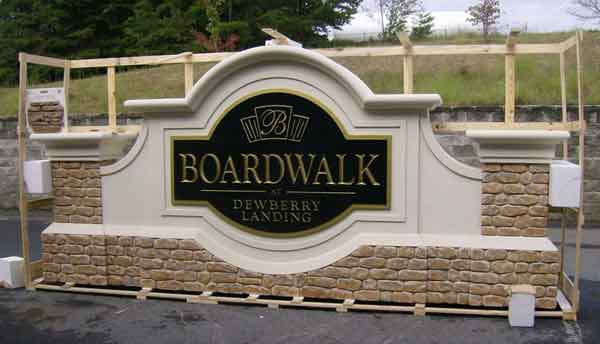
A monument sign is a ground sign with a solid base that visually connects to the landscape. Heights are modest. The cabinet or letter set sits on a pedestal or architectural body finished in stucco, brick, stone veneer, aluminum, or HDU. Monuments feel integrated and upscale. They are common at offices, medical parks, hotels, and retail centers with low speed frontage.
A pylon sign, often called a pole sign, raises the face on one or more columns so copy clears cars, parked vehicles, and landscaping. Heights range from modest to highway scale depending on jurisdiction. Pylons serve arterials and multi-tenant sites where sight lines are blocked at lower levels.
Visibility, approach speed, and sight lines
Start with the street. Approach speed and viewing distance dictate how tall and how bold the copy must be. On a 35 kmh neighborhood street, drivers have time to read a low monument with a crisp face and good contrast. On a 70 kmh arterial, a low sign can disappear behind traffic. A pylon that elevates copy to eye level above cars holds attention longer and gives enough preview distance to make the turn.
Stand where drivers will first see the site. Look for parked car rows, shrubs, slope, and neighboring signs that block view. If the first clear view is close to the driveway, you need height or a second sign near the entry. If the corridor is visually clean, a well proportioned monument with strong contrast can outperform a skinny tall sign because the message sits in the natural sight line.
Single tenant vs multi tenant needs
A single tenant can commit the entire face to one brand and one message. Both monuments and pylons work. Multi tenant properties need tenant panels or a changeable message area. Pylons handle stacked panels cleanly because height gives room for multiple lines at readable sizes. Monuments can carry tenant panels too, but copy quickly shrinks if many brands demand space. If you have five or more tenants and fast traffic, a pylon is usually the safer pick for legibility.
Copy size, face technology, and nighttime legibility
Copy height sets legibility distance. A simple rule of thumb is about 25 millimeters of letter height per 3 meters of legible distance, adjusted by font weight and contrast. Internally illuminated faces with quality translucent vinyl or push-through acrylic read cleanly at night. On pylons, faces are often larger and may use prismatic reflective vinyl for unlit sections that must pop under headlights. Monuments often lean on premium face finishes and architectural lighting to feel tailored to the site.
Electronic message centers can be integrated into either format, subject to local code. On monuments, EMCs tend to be smaller and pedestrian friendly. On pylons, EMCs reach drivers at speed. Confirm brightness limits, dwell time, and animation rules before you spec a display.
Wind load, structure, and foundations
Both formats must resist local wind load. Pylons are more demanding because height multiplies bending moments at the footing. Expect an engineered steel column or dual columns, a welded frame, anchor bolts, and a deep foundation sized to soil bearing capacity. Monuments spread load across a wider base with a shorter lever arm, which often reduces steel and concrete needs.
Ask for a sealed drawing with design wind speed, exposure category, material specs, anchor details, and footing size. If soils are poor or utilities crowd the frontage, a monument may be more practical because it needs less depth. If a pylon is essential, plan footing coordination early so utility locates and easements do not stall digging.
Code, zoning, and setbacks
Most jurisdictions separate signs into wall, ground, and pole categories with distinct height, area, and setback limits. Corridor overlays, historic districts, and planned developments often favor monument forms to maintain a streetscape. Before design, gather the parcel zoning, right of way line, sight triangle rules at driveways, and any supplementary corridor standards. If code caps height at a low number, a well built monument is the likely answer. If the site fronts a state highway with a tall allowance, a pylon may be permitted and expected.
Materials, faces, and lighting choices
Monuments invite architectural finishes. Aluminum cabinets with routed faces and push-through acrylic create a premium look. Stucco bodies on CMU cores, stone veneer, brick plinths, and prefinished aluminum cladding appear often. External LED floods can light simple non-lit faces, though internal illumination gives better evenness and fewer shadows from landscaping.
Pylons emphasize structural clarity and large, durable faces. Double-sided aluminum cabinets with polycarbonate or acrylic faces dominate. For impact zones, prismatic polycarbonate faces with UV coating resist hits. For upscale pylon treatments, cladding the pole in aluminum with reveal lines, adding a decorative cap, and using push-through copy elevates the look without losing height.
Maintenance and service access
Monuments are easy to service from the ground or a short ladder. Lamp and module replacement is faster and cheaper. Pylons require a bucket truck or lift for almost any service. Factor access into total cost of ownership. On multi tenant pylons, plan face retention systems that allow quick panel swaps when tenants churn. On monuments with changeable tenant strips, ensure panels are standard sizes so new copy can be produced without full face remakes.
Foundations, drainage, and landscaping details
A handsome monument can still fail if water and soil attack it. Raise bases above grade, slope caps, and keep irrigation heads off the sign body. Specify weeps on cabinets. For pylons, detail a skirt or cladding that sheds water and hides anchor bolts while allowing inspection. Coordinate with landscape plans so shrubs do not grow to cover the lower third of the faces within a season.
Cost and lead time realities
Monuments typically cost less than comparable pylons because steel and lifting requirements are lighter. Custom masonry, faux stone, and complex push-through faces add cost but still land below tall structures. Pylons carry more steel, deeper footings, larger faces, and lift time, which increases price and lead time. If a grand opening has a fixed date, a monument may meet schedule where a fully engineered pylon cannot. If visibility stakes the success of a fuel station or big box anchor, budget for the pylon early.
Safety, power, and inspections
Both formats require proper grounding, wet-location wiring, and listed components. Pylons add fall protection and lift planning during install. Expect footing, anchor bolt, and electrical inspections. Keep as-builts with buried conduit routes so future work does not cut power. For EMCs, include a photo cell and a time clock or controller that meets brightness limits after dark.
Design tone and brand fit
Monuments communicate permanence and care. They suit medical, hospitality, higher education, and planned retail campuses. Pylons communicate reach and visibility. They suit travel corridors, auto dealers, fuel and wash, and multi tenant retail where discovery at speed matters. The correct choice aligns with how customers arrive and what the brand wants people to feel before they step out of the car.
Common mistakes and how to avoid them
Under-sized copy ruins both formats. If you must list many tenants, resist squeezing seven lines into a small monument. Either grow the structure within code or move to a pylon so letters remain readable. Do not place a low monument behind parking that is always full. Do not set a pylon so close to the curb that truck splash and road debris beat the face. Avoid tall skinny cabinets on single poles that look dated and flex in wind. Favor balanced proportions, clean cladding, and adequate column sizing.
A quick decision framework
Answer five questions. What is the posted speed and actual average speed. Where are the first clear sight lines for approaching drivers. How many tenants must be readable. What does zoning allow for height, area, and setbacks. What are the soil and utility conditions at the frontage. If speeds and obstructions are high and code allows height, choose a pylon. If speeds are low, aesthetics matter, and code encourages ground forms, choose a monument. If tenants are many and copy must be large, lean toward a pylon. If soils are poor and utilities crowd the frontage, lean toward a monument with a second small directional near the entry.
Spec checklist you can hand to a fabricator
Provide parcel address, zoning and corridor notes, allowed height and area, setbacks from right of way and sight triangle requirements, desired single or double face, tenant count, copy heights, face technology, color specs, lighting type, wind speed and exposure, soil report if available, preferred finishes for the body or pole cladding, and target install date. Add a photo of the frontage from the driver’s approach and mark the desired sign location. With this packet, a shop can engineer, permit, and build without guesswork.
The practical takeaway
Choose a monument when you want integrated architecture at pedestrian or low speed frontages and when code or soils favor lower structures. Choose a pylon when traffic moves fast, parked cars block low sight lines, or multi tenant copy must be legible at distance. Size copy for approach speed, respect wind load and footing depth, and detail lighting for even night reads. When the decision matches the street and the site, your ground sign will be easy to find, simple to maintain, and aligned with the brand from the first glance.